
Rent construction machinery, aerial work platforms and cranes in Switzerland
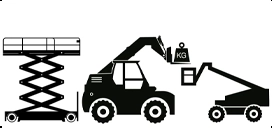
Luibl Rental delivers construction machinery, aerial work platforms, mobile cranes and telehandlers directly to Swiss construction sites. This article informs B2B customers about the scope of delivery, available equipment, rental processes, the legal framework and all relevant points concerning the use of rental machines in Switzerland.
Delivery area & scope of delivery in Switzerland
Luibl Rental delivers rental machines to all cantons of Switzerland. The machines are transported on our own low-loader and heavy-haulage vehicles to the agreed sites in Switzerland. Typical areas of application in Switzerland include:
-
Building construction projects in conurbations such as Zurich, Basel, Bern and Geneva
-
Infrastructure measures in tunnel construction, bridge construction and road construction
-
Industrial assembly, process plants and energy projects
-
Façade and maintenance work in urban locations
-
Large-scale agricultural and forestry projects in alpine regions
-
Logistics and handling work in industrial and commercial areas
| Region | Key locations | Typical application |
|---|---|---|
| North-western Switzerland | Basel, Aarau, Olten | Chemical industry, building construction |
| Mittelland (Central Plateau) | Bern, Lucerne, Solothurn | Infrastructure, administrative buildings |
| Zurich & surroundings | Zurich, Winterthur, Schaffhausen | Building construction, maintenance, commercial |
| Eastern Switzerland | St. Gallen, Chur, Frauenfeld | Industry, alpine projects |
| Central Switzerland | Zug, Schwyz, Glarus | Energy projects, special assembly |
| Western Switzerland | Geneva, Lausanne, Fribourg | Building construction, trade fairs, logistics |
| Ticino | Lugano, Bellinzona, Locarno | Tunnel construction, infrastructure |
The scope of delivery includes the complete transport logistics (outbound and return transport), the machine handover at the agreed location including a handover protocol, as well as all necessary CE declarations of conformity, operating manuals and inspection certificates. Luibl Rental is responsible for the safe transport up to the agreed handover address.
Available machines for Switzerland
The following fleet is available for operations in Switzerland. All machines comply with the applicable EU safety standards (CE marking) and are inspected regularly in accordance with Swiss and European standards.
Mobile cranes – Liebherr LTM series
| Model | Lifting capacity | Typical application (CH) |
|---|---|---|
| Liebherr LTM 1040-2.1 | 40 t | Assembly work, hall construction |
| Liebherr LTM 1060-3.1 | 60 t | Building construction, bridge work |
| Liebherr LTM 1070-4.2 | 70 t | Steel and concrete construction |
| Liebherr LTM 1090-4.2 | 90 t | Machine assembly, industry |
| Liebherr LTM 1100-5.3 | 100 t | Infrastructure, wind energy |
| Liebherr LTM 1120-4.1 | 120 t | Building construction Zurich/Basel |
| Liebherr LTM 1150-5.3 | 150 t | Special assembly, bridges |
| Liebherr LTM 1160-5.2 | 160 t | Process plants, energy |
| Liebherr LTM 1230-5.1 | 230 t | Heavy-load assembly |
| Liebherr LTM 1300-6.3 | 300 t | Tunnel construction, alpine projects |
| Liebherr LTM 1350-6.1 | 350 t | Large-scale assembly |
| Liebherr LTM 1450-8.1 | 450 t | Industrial plants, power stations |
| Liebherr LTM 1650-8.1 | 650 t | Heaviest lifts |
| Liebherr LTM 1750-9.1 | 750 t | Special large-scale projects |
Roto telehandlers The Roto telehandler fleet offers 360-degree rotation and is particularly suited to confined Swiss construction sites in urban settings:
- Merlo Roto 40-16, 40-18S – compact entry level for city sites
- Merlo Roto 50-21S, 50-26S, 50-30S Plus, 50-35S Plus – versatile all-rounders
- Merlo Roto 70-24S, 70-28S – long reach for building construction projects
- Manitou MRT 2150 Privilege, MRT 2260, MRT 2550 Privilege, MRT 2570, MRT 3570 – the Manitou Roto range
- Magni RTH 4-18, RTH 6-25SH, RTH 6-26SH, RTH 6-35SH – Magni special solutions
- Genie GTH-4016R – Genie Roto telehandler
Fixed telehandlers & heavy-duty telehandlers
- Manitou MT 625, MT 625E (electric), MT 1840 – standard telehandlers
- Manitou ULM 415, MHT 11250 ST5 – heavy-duty telehandlers
- Merlo P 30-10, P 38-13, P 72-10.2, P 120-10 HM – Merlo fixed range and heavy-duty
Aerial work platforms
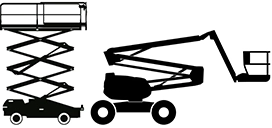
Scissor lifts (electric and diesel):
-
Genie GS-1330, GS-1432M E-Drive, GS-2032 – electric scissor lifts
-
KB Lift S-80N, S-80COR, S-140W – electric scissor lifts
-
Holland Lift HL285 E13 4WDS, HL330 E14 4WDS – large electric scissor lifts
-
JLG Liftlux 245-25, Holland Lift HL-340D30 4WDS-N – diesel scissor lifts
-
HAB S320-12E 4WDS – electric rough-terrain platform
Telescopic and articulated telescopic boom lifts (diesel and electric):
-
Genie S-125, JLG 660SJ, Haulotte H14TX – telescopic boom lifts
-
Genie ZX-135-70 – diesel articulated telescopic boom lift
-
Genie Z30/20N RJ, Niftylift HR12L, Manitou 150 AETJ-C 3D – electric articulated boom lifts
Tracked aerial work platforms:
-
CTE TRACCESS 135 – tracked aerial work platform for difficult terrain
-
CTE TRACCESS 170 – larger tracked aerial work platform
-
Teupen LEO30T Plus, LEO40GTX – Teupen tracked aerial work platforms
Mini cranes
- Maeda MK3053CB – compact mini crane for confined conditions
- Maeda MC815C – powerful mini crane
Excavators
- Yanmar SV18 (1.8 t) – mini excavator for indoor work
- Bobcat E35 (3.5 t), Bobcat E50 (5 t) – compact excavators
- Doosan DX140LC-5 (14 t), DX235LC-5 (23 t), DX300LC-5 (30 t) – crawler excavators
Forklifts & rough-terrain forklifts
- Kalmar ECF 80-9 (8 t electric), Kalmar DCG 160-12T (16 t diesel) – heavy-duty forklifts
- Rough-terrain forklift fleet for outdoor use
- High-lift pallet trucks for warehouse operation
The rental process
Enquiry and contract conclusion
Enquiries can be made directly via luibl.eu, by email or by telephone. After clarifying your requirements (machine type, site location in Switzerland, rental period, access conditions), Luibl prepares a binding quote. The rental contract is concluded in writing and contains all terms in accordance with the general terms and conditions of Luibl Rental.
Delivery and handover
Luibl Rental handles the transport of the machine to the agreed Swiss site. At handover, a handover protocol is drawn up documenting the condition of the machine, the operating-hours/meter reading and the accompanying documents (CE declaration of conformity, operating manual, latest inspection records). The hirer confirms proper receipt by signature.
Short- and long-term rental
Luibl Rental offers both short-term rental solutions and long-term rental contracts. The minimum rental periods and specific terms can be found in the respective rental contract and the terms and conditions. For long-term project durations, an individual agreement can be made.
Return
The machine is returned at the end of the agreed rental period. Luibl Rental collects the machine from the site. On return, the condition of the machine is documented in the return protocol. Any damage beyond normal wear and tear is charged in accordance with the rental contract and terms and conditions.
Important note on the rental process All contract details, minimum rental periods and terms are governed exclusively by the individual rental contract and the terms and conditions of Luibl Rental (luibl.eu/agb/). Specific delivery times or transport durations cannot be promised across the board – these depend on availability, route and operating conditions.
Breakdown assistance & replacement service
Luibl Rental offers a breakdown assistance and replacement service for rental machines in Switzerland. In the event of technical faults during the rental period, qualified service fitters are available.
On-site service by service fitters
Luibl service technicians can be dispatched to the Swiss site in the event of technical defects. This includes diagnosing and rectifying faults directly on the construction site. For fitter assignments in Switzerland, the posting rules for employees to Switzerland apply (see the Legal framework section).
Replacement machine service
In the event of a non-repairable defect or a longer repair time, Luibl Rental can – subject to availability – provide a replacement machine. The terms for the replacement machine service are set out in the rental contract.
Communication in the event of a breakdown
Failures and faults must be reported to Luibl Rental without delay. All contact details and communication channels are noted in the rental contract. Prompt reporting enables a swift response and minimises downtime on the construction site.
Legal & technical framework in Switzerland
Qualifications and instruction for machine operation
In Switzerland, there are specific requirements for machine operators arising from the Labour Act (ArG), Ordinance 3 to the Labour Act (ArGV 3) and the SUVA guidelines (Swiss National Accident Insurance Fund):
-
Aerial work platforms: operating aerial work platforms requires demonstrable instruction and, where applicable, an operating permit. SUVA recommends training in accordance with the European IPAF standards (International Powered Access Federation). Proof comparable to the German IPAF PAL Card is required on many Swiss construction sites by general contractors and clients.
-
Telehandlers / Roto telehandlers: operators must receive written operating instructions and be instructed in the operation of the device. The SUVA publication 'Using telehandlers safely' applies to telehandlers. Formal certifications (e.g. AEAC in western Switzerland) are standard in the industry.
-
Mobile cranes: operating mobile cranes requires crane operator training. Credentials recognised in Switzerland: SKA (Swiss crane operator training) or equivalent European certificates. Many clients also require a crane operator's licence in the category set out in the SUVA guidelines.
-
Excavators: instruction on the device is mandatory for excavator operators. For commercial use, proof of vehicle operator competence is standard in the industry; on large sites, AEAC credentials or comparable EU certificates are frequently required.
Driving licence and permit requirements
| Machine type | Road driving licence (CH) | Other requirements |
|---|---|---|
| Mobile crane LTM | Category C/CE (truck + trailer) for driving the crane on public roads | Crane operator's licence, special transport permit for over-size |
| Telehandler (on site) | No driving licence required for site operation | Operating instructions and instruction in accordance with SUVA |
| Aerial work platforms (on site) | No driving licence required for site operation | IPAF card recommended, SUVA instruction |
| Crawler excavator (site) | No driving licence required for site operation | Instruction and operating instructions |
| Road transport (low-loader) | Category CE (Luibl Rental driver) | Luibl Rental assumes responsibility for the transport |
Tax obligations in Switzerland
Switzerland is not an EU member and has its own value-added tax system (MWST). The following tax aspects are relevant for machine hire from Germany:
-
Value-added tax (MWST / TVA / IVA): the standard Swiss VAT rate is 8.1% (as of 2024). For machine hire into Switzerland, the place-of-recipient principle applies: if the hirer is a company based in Switzerland, the Swiss recipient of the service generally owes the Swiss VAT (reverse-charge procedure, where applicable under the Swiss VAT Act). Luibl Rental recommends having the specific tax situation clarified by a tax adviser based in Switzerland.
-
VAT registration: if the turnover of a foreign company from taxable services in Switzerland exceeds the annual turnover of CHF 100,000, there is an obligation to register for VAT with the Federal Tax Administration (ESTV). For short-term hire below this threshold, registration is generally not required.
-
Withholding taxes / construction service tax: Switzerland has no general construction service tax for foreign companies comparable to the German construction withholding tax system. However, the cantonal compensation funds may provide for withholding tax deductions for posted employees. Luibl Rental clarifies these questions on a case-by-case basis.
Safety inspections and technical acceptances
The following inspection requirements are relevant for rental machines in Switzerland:
-
Work equipment inspection under SUVA: SUVA requires regular inspections of lifting platforms, cranes and load-handling equipment. For rental equipment, the lessor (Luibl Rental) must provide evidence of the periodic inspections. Luibl Rental provides the corresponding inspection records at machine handover.
-
Initial inspection before commissioning: before a machine is first used on the Swiss construction site, the hirer must ensure that the device is suitable for the intended site and that the safety equipment functions. The instruction on the device must be documented.
-
Industry-specific standards: depending on the field of use, additional inspection standards apply, e.g. CECIMO standards for cranes (EN 13000), EN 280 for mobile elevating work platforms or standards of the Swiss Society of Engineers and Architects (SIA).
-
Inspection intervals: Luibl Rental carries out all legally prescribed maintenance and inspection intervals. The inspection records are included in the handover protocol.
Occupational safety and working conditions
The Swiss Labour Act (ArG) and Ordinances 1–5 to the Labour Act govern working conditions on Swiss construction sites. As hirers and employers of their operators, Luibl customers are responsible for complying with the following requirements:
-
Operational safety ordinance (analogous): the SUVA guidelines (in particular the EKAS guidelines) are the authoritative occupational safety regulations on Swiss construction sites.
-
Coordination on construction sites: on sites with several parties, the Swiss implementation of the EU Construction Sites Directive (Ordinance on Safety and Health Protection on Construction Sites, VBauA) requires coordination between client and contractor. A safety and health protection plan (SiGe plan) must be drawn up on large sites.
-
Personal protective equipment (PPE): a helmet, safety shoes and a high-visibility vest, as well as fall protection where applicable, are mandatory. Specific PPE requirements apply to aerial work platform operators (safety harness when working in the basket).
-
Working hours: the Swiss working-time rules (ArG) differ from German law. Maximum daily working hours (10 hrs/day, max. 50 hrs/week with overtime) and rest periods must be observed.
Posting of employees to Switzerland
If Luibl Rental posts service fitters to Switzerland (e.g. for assembly, maintenance, breakdown assistance), the following provisions of the bilateral Switzerland-EU Agreement on the Free Movement of Persons (AFMP) and the Swiss Posting Act (EntsG) apply:
-
Notification obligation: EU employees working in Switzerland must be registered before starting work via the online notification system of the State Secretariat for Economic Affairs (SECO). For assignments of up to 8 days per calendar year, a simplified prior notification period applies (at the latest on the day before work begins). For longer assignments or certain sectors (construction), permit requirements apply.
-
Minimum wage / wage protection: Switzerland applies an industry-specific minimum wage in accordance with the national collective agreement (LMV) in the main construction sector. Posted employees are entitled to the wage customary in Switzerland for this activity.
-
Social insurance / A1 certificate: posted Luibl employees remain in the German social insurance system. The A1 certificate of German social insurance must always be carried on assignments in Switzerland and presented on request.
-
Deposit obligation: foreign companies operating in the construction sector in Switzerland may be required to lodge a deposit (to secure compliance with wage and working conditions). Luibl Rental clarifies this on a case-by-case basis.
Applicable law
In accordance with the general terms and conditions of Luibl Rental, all rental contracts are governed by German law. The terms and conditions contain a choice-of-law and place-of-jurisdiction clause in favour of Luibl's location. The hirer accepts these conditions by concluding the contract.
Transport & customs: import and customs clearance in Switzerland
Switzerland as a non-EU state: customs conditions
Switzerland is not a member of the European Union and is not part of the EU customs territory, although it belongs to the Schengen Area. The following customs and foreign-trade regulations therefore apply to the import of rental machines into Switzerland:
-
ATA Carnet or customs declaration: for rental machines that are temporarily imported into Switzerland (temporary importation), the ATA Carnet (international customs document for temporary importation) can be used. Alternatively, a formal customs declaration with Swiss customs (EZV, now the Federal Office for Customs and Border Security, FOCBS) is possible. Temporary use is exempt from customs duty and VAT if the device is demonstrably re-exported.
-
Import declaration: the machine must be declared to the FOCBS. For temporary importation of work equipment for commercial purposes, the Swiss Customs Act provides for facilitations.
-
Re-export: when the machine is returned to Germany, a corresponding export declaration is required.
Documents to be carried
| Document | Content / purpose |
|---|---|
| Rental contract (copy) | Proof of ownership and of temporary use |
| Handover protocol | Condition documentation, serial numbers and handover date |
| CE declaration of conformity | Proof of EU type examination and standards compliance |
| Latest UVV/inspection records | Proof of regular safety inspections |
| Operating manual (DE/FR/IT) | Mandatory document under the Machinery Directive |
| CMR consignment note | International consignment note for road transport |
| ATA Carnet (if applicable) | Customs document for temporary importation |
| Registration / vehicle document of the transporter | Required for low-loader and towing vehicle |
| Special permit (for over-size) | ASTRA permit for heavy transports in Switzerland |
Transport responsibility
Luibl Rental handles the transport of the rental machine to the agreed handover location in Switzerland and is responsible for the proper customs clearance. The transport vehicles have all the necessary registrations and are driven by Luibl drivers or commissioned hauliers with the appropriate qualifications.
Registration and road use in Switzerland
The following regulations of the Federal Roads Office (ASTRA) apply to the road transport of construction machinery and heavy transports in Switzerland:
-
Over-heavy/over-wide transports require an ASTRA special transport permit. This is applied for by Luibl Rental or the commissioned transport company.
-
Night and weekend driving bans: in Switzerland, a Sunday driving ban (00:00–24:00) and a night driving ban (22:00–05:00) apply on motorways and main roads for lorries over 3.5 t. Exceptions are possible with the appropriate permits.
-
Road traffic charges (LSVA): Switzerland levies a performance-related heavy vehicle charge (LSVA) on journeys with commercial vehicles over 3.5 t. Luibl Rental takes this into account in transport planning.
-
Tunnels and alpine routes: for transports through the Swiss Alps (Gotthard, San Bernardino, etc.), special route restrictions (height, width and weight limits) must be observed.
Liability & insurance
Allocation of liability under the Luibl terms and conditions
The allocation of liability between Luibl and the hirer is governed exclusively by the general terms and conditions of Luibl Rental. In principle, the following applies:
-
Luibl Rental is liable for providing the machine in an operationally safe condition in accordance with the contract at the time of handover.
-
From the time of handover, the hirer is liable for all damage to the machine that is not attributable to normal wear and tear.
-
The hirer bears the operating risk of the hired machine during the rental period.
-
Damage caused by improper use, operating errors or overloading is entirely at the hirer's expense.
The hirer's insurance obligations
Throughout the entire rental period, the hirer is obliged to ensure the following insurance cover:
-
Machinery insurance or deposit obligation: the hired machine must be adequately insured against theft, vandalism, damage and total loss. Luibl Rental may require a deposit to be lodged or proof of appropriate insurance cover.
-
Liability insurance: the hirer must provide proof of adequate public liability insurance for personal injury and property damage to third parties caused by the use of the rental machine.
Particularities in Switzerland
In Switzerland, the general liability and machinery insurance conditions of the Swiss insurance market generally apply to machines used commercially on construction sites. Many Swiss general contractors require subcontractors and machine suppliers to provide proof of adequate liability cover. Luibl Rental recommends clarifying these requirements with the client before starting work and, where necessary, temporarily extending the existing insurance cover.
Liability and insurance note All liability matters are governed exclusively by the terms and conditions of Luibl Rental (luibl.eu/agb/). Luibl Rental accepts no responsibility for damage that occurs during the rental period through the hirer or through improper use of the machine. The hirer is responsible for ensuring adequate insurance cover.
Contact and enquiry
Are you planning to use machinery in Switzerland? Luibl Rental is at your disposal for all questions relating to rental, transport, logistics and documentation.
Legal note All information in this article is provided solely for general guidance and does not replace legal, tax or insurance advice. Statutory requirements change regularly; the Swiss regulations in force at the time of use always apply. The binding basis of the contract is formed exclusively by the individual rental contract and the general terms and conditions of Luibl Rental (available at luibl.eu/agb/). Luibl accepts no liability for the completeness or timeliness of the legal information given here.