Rent construction machinery in Waldkirchen – your rental fleet for height access & logistics
Waldkirchen lies in the heart of the Lower Bavarian Forest, spread across 67 districts between hillside locations, forestry and a well-established commercial infrastructure. Anyone wanting to hire construction machinery here asks the hire company specific questions: will the equipment arrive on schedule? Will a 57-metre telescopic boom lift fit through the access road to the commercial estate on the outskirts of town? And what load capacity is actually available on soft, forest-typical ground – not just on paper?
Luibl supplies aerial work platforms, telehandlers, forklifts and construction machinery from a workshop-tested fleet with its own low-loader fleet. Delivery to Waldkirchen and the entire Freyung-Grafenau district is made from Passau – with no third-party haulier and with a fixed-date arrangement tailored to your project. Transport terms are calculated individually on the basis of your exact delivery address and the equipment required; Luibl replaces flat-rate price quotes with a direct, binding enquiry.
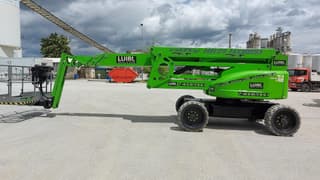
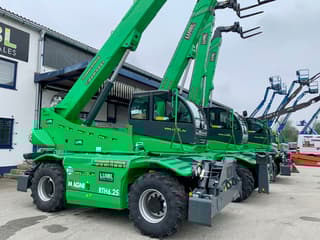
Rent aerial work platforms, telehandlers and forklifts in Waldkirchen
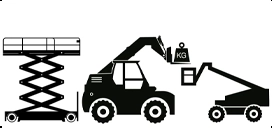
Three equipment classes cover the essential requirements in the Waldkirchen area. Which class is the right one depends not on the type of project but on the exact deployment scenario: working height, ground load capacity, access width and the question of whether lifting and material supply have to be carried out at the same time.
Scissor lifts and articulated boom lifts for precise work at height
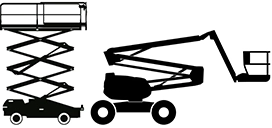
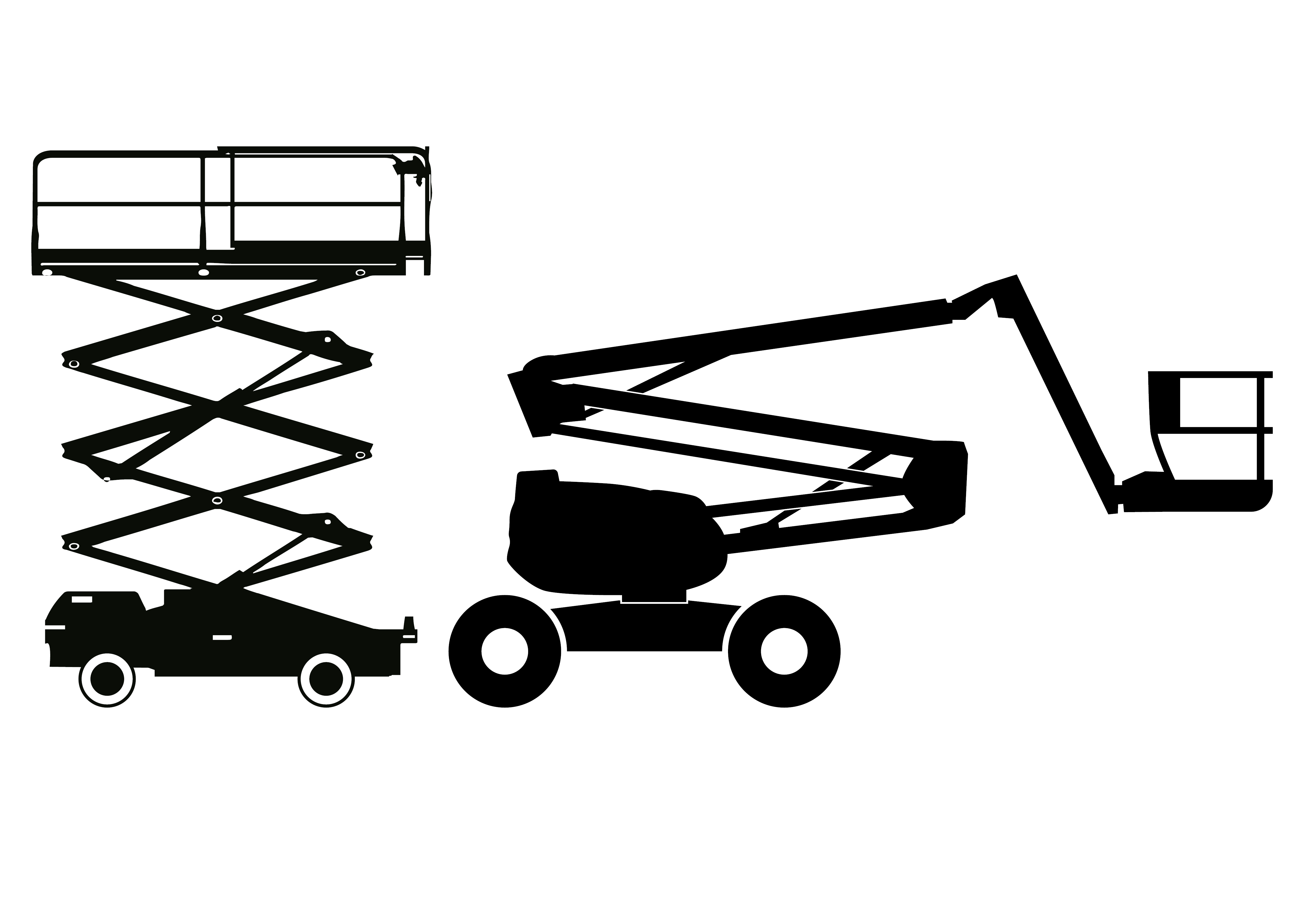
Electric scissor lifts with non-marking solid rubber tyres are the standard solution for work in halls and commercial buildings where the floor must remain undamaged. Emission-free in operation, quiet and with a platform width below 1.20 m suitable for standard sectional doors, these models reach working heights from 8 m to 16 m. In the commercial estates around Waldkirchen – for example in Pollmannsdorf or near the railway station – they are the preferred equipment for maintenance work on lighting systems, ventilation systems and steel girders beneath hall roofs.
Diesel scissor lifts with all-wheel drive (4×4) and an oscillating axle handle outdoor use on compacted gravel, construction debris and light terrain. With load platforms up to 1,000 kg and working heights up to 34 m, they are designed for façade work, sewer-construction support work and outdoor-facility maintenance.
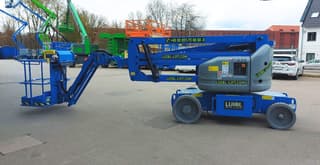
Diesel articulated boom lifts go considerably further: they work with an angled boom over roof edges, steel girders or tree crowns without the machine having to be positioned exactly beneath the working point. For roof assembly on hillside locations in the Bavarian Forest, this is a decisive advantage – the high oscillating axle keeps the platform stable even on uneven terrain with cross-slopes of up to several degrees. Working heights for these models start at approx. 20 m; the maximum working height in the Luibl fleet is 48 m (diesel articulated boom lifts) or 57 m for telescopic boom lifts without articulation.
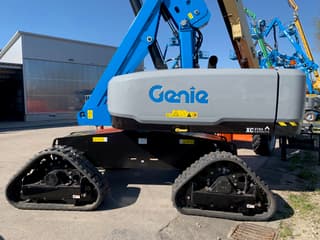
Tracked work platforms with over 50% gradeability and hydraulically extendable outriggers cover applications where wheeled work platforms fail: soft forest floor, steep gradients or very uneven terrain structures without load-bearing access routes. The tracked drive distributes the machine weight over a considerably larger footprint and significantly reduces the ground pressure compared with tyres.
All aerial work platforms in the Luibl fleet are regularly inspected in accordance with DGUV Principle 308-009; the current accident-prevention (UVV) inspection certificate is part of the machine handover.
Fixed and rotating telehandlers with maximum load capacity
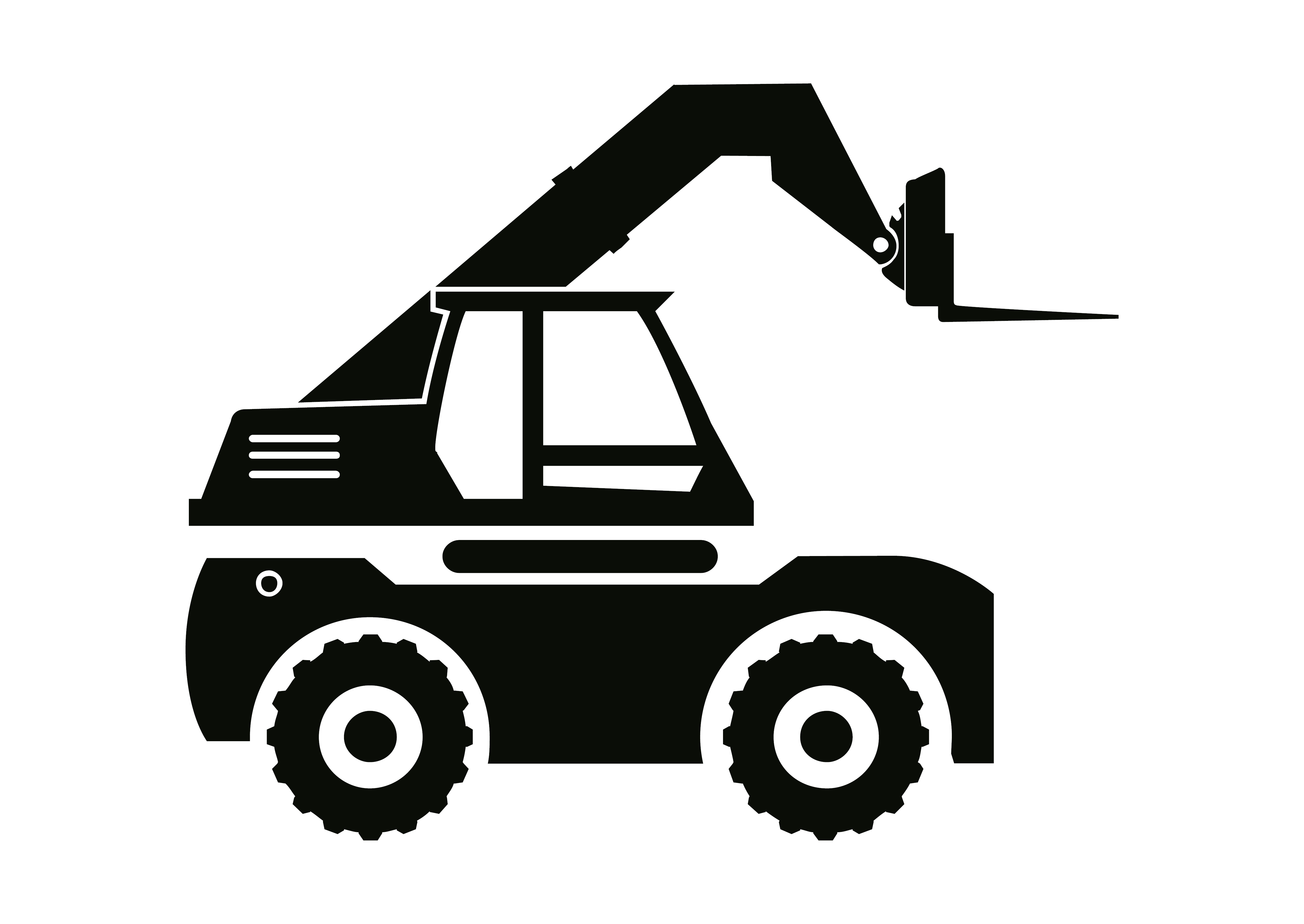
Fixed telehandlers from Merlo, Manitou and Magni offer load capacities from 2.5 t to 4.5 t at lifting heights up to 18 m. Thanks to 4×4 all-wheel drive, all-wheel steering and a robust off-road tyre profile, they are designed for mixed construction sites in the Lower Bavarian Forest: they transport building material on compacted ground just as reliably as on soft terrain with short inclines.
Rotating telehandlers (Roto models) turn the boom through 360°, thereby combining lifting and loading performance with the flexibility of a compact working platform. With lifting heights up to 39 m and interchangeable attachments – rope winch, work basket, earth-auger attachment, fly jib – they replace a separate mobile crane on sites with confined conditions. In Waldkirchen's inner-city areas with narrow passages, this is economically relevant: instead of two machines and two rigs, one Roto machine with the appropriate attachment is enough.
Operating a rotating telehandler requires machine-specific instruction. Load charts – particularly at maximum lateral reach close to the tipping load – differ considerably from model to model. Manufacturers such as JLG, Genie, Merlo and Manitou provide detailed data sheets; Luibl issues these on request so that, before starting work, you can calculate the permissible payload for the planned boom length and the specific ground type. Operation outside the approved load range leads to tipping moments that build up abruptly at maximum reach.
As a heavy-duty telehandler, the Manitou MHT 10200 carries up to 20,000 kg at lifting heights above 10 m – a directly available rental option for heavy timber, precast concrete elements or steel structures. The qualification requirements for operators of telehandlers are governed by DGUV Principle 308-009.
Forklifts and rough-terrain heavy-duty forklifts for site logistics
Electric front forklifts with load capacities from 1.5 t to 3.5 t work emission-free in enclosed production halls, warehouses and covered construction sites. Gas-powered front forklifts can be refuelled quickly and can be used both indoors and outdoors. Diesel front forklifts offer the highest continuous performance in outdoor operation.
Rough-terrain forklifts with all-wheel drive, off-road tyres and high ground clearance can be used reliably on un-levelled construction ground or forestry ground, where standard warehouse forklifts would get stuck at the first frost or after rainfall.
Heavy-duty forklifts up to 16 t load capacity cover the logistics requirements for industrial assembly, for loading steel or timber elements and for operation in the region's wood-processing operations. The inspection obligation for industrial trucks arises from DGUV Regulation 68; the documented inspection reports are handed over with the machine.
Industry deployment scenarios for Waldkirchen and the Lower Bavarian Forest
The economic structure of the Waldkirchen area combines the timber and sawmill industry, medium-sized commerce, the building trade and municipal infrastructure projects. This diversity determines which machine types are in demand.
Timber construction and carpentry: When erecting timber-frame constructions, roof trusses and hall girders on un-levelled ground, an all-wheel telehandler with a basket attachment is the most productive piece of equipment. It lifts purlins and girders to height, positions fitters directly at the working point and supplies the site with material in between – without repositioning effort. Merlo and Manitou models with a fly jib achieve load-moment combinations that are typical for timber-construction loads and are documented precisely in the load chart.
Commercial-estate maintenance: In Waldkirchen's commercial estates, regular work arises on hall roofs, façade cladding, sprinkler systems and crane structures. For this work, compact electric scissor lifts with non-abrasive tyres are the right choice – no exhaust smell in the hall, no tyre marks on the industrial floor, no emissions permit requirement close to production. Daily hire for maintenance jobs is possible; on request, Luibl also coordinates short-notice delivery dates.
Municipal infrastructure: Slope stabilisation, tree-care work along district roads and refurbishments of public buildings in the hilly surrounding area require equipment with active support on uneven ground. Articulated boom lifts with extendable support legs and tracked work platforms with hydraulic levelling form the technical foundation for stable working even on inclined ground.
Industrial projects and short-notice deployments: Project delays due to weather, material deliveries or subcontractor failures are normal in the construction process. At Luibl, rental periods can be extended at short notice on request. Direct telephone contact on +49 (0) 851 756868-0 is the fastest route when an extension requirement arises that could not be planned in advance.
Liability protection and machinery breakdown insurance when hiring
Concluding a rental contract for construction machinery transfers specific operator obligations to the hirer and, at the same time, a liability risk for damage that occurs during the rental period. Clarifying this before signing avoids surprises on return.
What the hirer owes as operator: Under the Industrial Safety Regulation (BetrSichV) and the associated technical rules, the operator is obliged to inspect the work equipment for visible damage, operating fluids and functionality before start-up. This inspection obligation applies daily at the start of the shift and is documented under DGUV Regulation 1 (Principles of Prevention). Putting a damaged machine into operation nonetheless establishes shared responsibility on the part of the operator – regardless of whether the damage was already present at the hire company.
Which damage is typically up for discussion: scratches and paint loss from narrow passages, hydraulic damage from use on terrain types outside the equipment specification (e.g. operating a non-off-road scissor lift on steeply sloping ground), soiling from forest-floor residues or mud, as well as transport damage when repositioning with your own equipment. Which damage counts as normal operation and which as negligence is to be regulated in the rental contract – request this in writing before the contract is concluded.
Machinery breakdown insurance: Whether Luibl offers optional machinery breakdown insurance or an excess arrangement in the event of damage is part of the offer conditions and is set out on request as part of the rental terms. Also check whether your existing business liability or construction-works insurance covers hired third-party machines during use. Unguarded construction sites overnight represent a separate risk that is subject to restrictions in the scope of cover of many standard policies.
Instruction as liability protection: Machine instruction in accordance with ISO 18878 (aerial work platforms) and DGUV Principle 308-009 (telehandlers) is not a bureaucratic exercise but concrete protection: demonstrably instructed operators considerably reduce the risk of tipping moments, overloading and collisions. On request, Luibl ensures documented instruction by its own technicians at the machine handover.
What applies in the event of a technical defect: Defects not attributable to operator error are handled via Luibl customer service. The technician request rental service at luibl.eu/en/technician-request/ is the direct route for immediate service on site. Whether standstill costs are reimbursed in the case of a manufacturer-side material defect is to be regulated contractually.
Enquire now – construction machinery hire for Waldkirchen and the surrounding area
Do you need the exact load chart for a telehandler or the data sheets on the off-road suitability of a scissor lift for your site in the Waldkirchen area? Luibl provides technical documents on request and coordinates the delivery date and transport terms in a single step.
Telephone expert advice and transport coordination: +49 (0) 851 756868-0 (Mon–Fri, 08:00–17:00)